Virtual Fashion Design Software: Revolutionizing SHEIN’s Production & Reducing Sample Waste
Anúncios
Virtual Fashion Design Software: Revolutionizing SHEIN’s Production & Reducing Sample Waste
The fashion industry, long characterized by its rapid cycles and often resource-intensive processes, is undergoing a profound transformation. At the forefront of this revolution is the adoption of advanced virtual fashion design software, a technology that is reshaping how garments are conceived, developed, and brought to market. Companies like SHEIN, known for their agile business model and extensive product offerings, are increasingly leveraging these digital tools to optimize their operations, enhance creativity, and significantly reduce their environmental footprint, particularly in the United States market.
Anúncios
The journey from concept to consumer traditionally involves numerous stages, each requiring physical prototypes and extensive material usage. However, the advent of sophisticated virtual fashion software is dramatically altering this paradigm. By enabling designers to create, visualize, and iterate on garments entirely in a 3D digital environment, this technology minimizes the need for physical samples, leading to substantial savings in time, cost, and resources. For a global powerhouse like SHEIN, which introduces thousands of new products daily, the implications of such efficiency gains are monumental.
This article delves into the transformative power of virtual fashion design software, exploring its core functionalities, the benefits it offers to fast-fashion giants like SHEIN, and its crucial role in driving sustainability within the industry. We will specifically examine how this technology contributes to an estimated 30% reduction in sample production, a significant step towards a more efficient and environmentally conscious fashion future.
Anúncios
The Evolution of Fashion Design: From Sketchpad to Screen
For centuries, fashion design was an inherently manual process. Designers would sketch ideas on paper, create detailed technical drawings, and then work with pattern makers and seamstresses to produce physical samples. This iterative process, while allowing for tactile evaluation, was often time-consuming, expensive, and prone to errors that would only become apparent after a physical garment was produced. Each design modification often necessitated a new physical sample, leading to considerable material waste and extended lead times.
The introduction of Computer-Aided Design (CAD) in the latter half of the 20th century marked the first significant step towards digitizing the design process. Early CAD systems primarily focused on 2D pattern making and grading, offering efficiency improvements over manual methods. However, the true revolution began with the development of 3D virtual fashion design software.
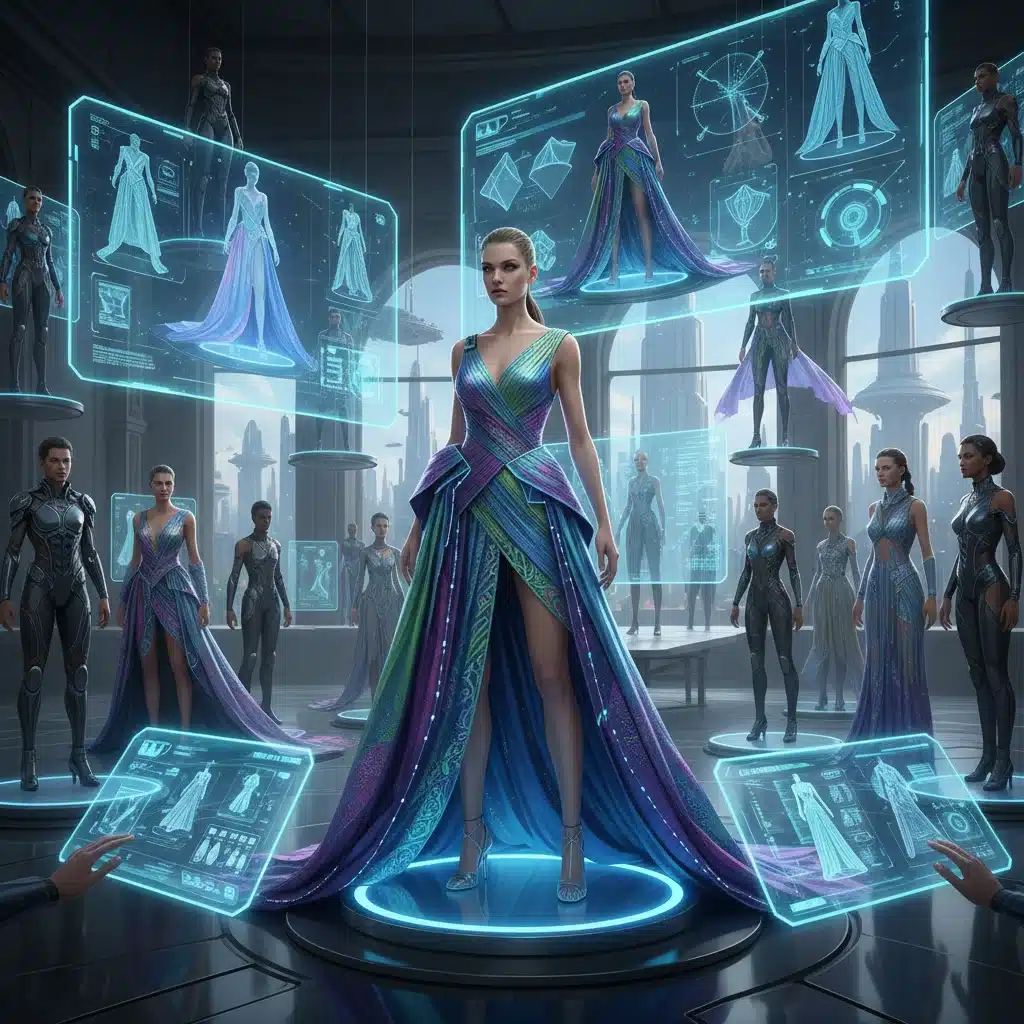
Modern virtual fashion software allows designers to create highly realistic 3D representations of garments, complete with accurate draping, texture mapping, and even animation. These digital tools simulate how fabric would behave in the real world, accounting for gravity, movement, and different material properties. This level of realism means that designers can visualize their creations with unprecedented accuracy, make adjustments in real-time, and even present collections virtually before a single stitch is sewn.
Key Features of Advanced Virtual Fashion Design Software
The capabilities of contemporary virtual fashion design software are extensive and continually evolving. Some of the most critical features include:
- 3D Pattern Design and Draping: Designers can create patterns directly in 3D or import 2D patterns and drape them onto customizable avatars. The software then simulates how the fabric would fall and fit, allowing for immediate adjustments.
- Realistic Material Simulation: Advanced algorithms mimic the physical properties of various fabrics, from silk and denim to leather and knitwear. This includes characteristics like elasticity, stiffness, thickness, and sheen.
- Avatar Customization: Virtual fashion software offers a wide range of customizable avatars, allowing designers to test garments on different body types, sizes, and poses, ensuring inclusive design.
- Texture and Print Mapping: Users can apply digital prints, embroidery, and other embellishments directly onto 3D garments, visualizing their final appearance with precision.
- Real-time Rendering and Animation: Designs can be rendered in high resolution, often with photorealistic quality. Animation features allow garments to be seen in motion, providing a dynamic view of how they will look when worn.
- Collaboration Tools: Many software platforms include features for seamless collaboration, allowing teams to share designs, provide feedback, and make revisions efficiently, regardless of geographical location.
- Integration with PLM and ERP Systems: Integration with Product Lifecycle Management (PLM) and Enterprise Resource Planning (ERP) systems streamlines the entire product development workflow, from design to manufacturing and inventory management.
SHEIN’s Embrace of Virtual Fashion Software: A Game Changer
SHEIN’s business model is built on speed and responsiveness to trends. Their ability to rapidly design, produce, and distribute new styles is a key differentiator. However, this high-volume, fast-paced approach traditionally comes with challenges, particularly concerning sample production. Each new design typically requires multiple physical samples for fit evaluation, material approval, and photography, leading to significant resource consumption.
By integrating virtual fashion design software into its creative process, SHEIN has found a powerful solution to these challenges. The company can now accelerate its design cycles, reduce costs, and enhance sustainability, all while maintaining its core competitive advantage.
Streamlining the Creative Process
Before the widespread adoption of virtual fashion software, a designer at SHEIN would conceptualize a garment, sketch it, and then send the design to a pattern maker. A physical sample would then be created, often in a different location, and shipped back for review. This back-and-forth process could take weeks, with each iteration adding to the timeline.
With virtual fashion design software, this process is dramatically compressed. Designers can directly translate their ideas into 3D models, experimenting with different fabrics, colors, and silhouettes instantly. Adjustments can be made in minutes, not days. This agility allows SHEIN to respond even more quickly to emerging fashion trends, bringing new styles to market at an unprecedented pace.
The ability to visualize designs in 3D also fosters greater creativity. Designers are empowered to experiment with complex cuts, intricate details, and innovative fabric combinations without the constraints and costs associated with physical prototyping. This leads to a broader and more diverse range of products, further solidifying SHEIN’s position in the fast-fashion landscape.
Reducing Sample Production by 30% and Beyond
One of the most significant and tangible benefits of virtual fashion software for SHEIN is the dramatic reduction in physical sample production. Industry estimates suggest that companies utilizing these technologies can cut down on physical samples by 30% or more. For a company operating at SHEIN’s scale, this translates into enormous savings in materials, labor, and shipping costs.
Consider the typical journey of a single garment design. Without virtual fashion design software, it might require a first sample for fit, a second for fabric and color approval, and perhaps a third for photography. Each of these samples consumes fabric, thread, and other materials, and each must be cut, sewn, and shipped. With virtual fashion software, many of these stages can be completed digitally:
- Digital Fit Reviews: Designers and technical teams can assess fit and drape on virtual avatars, making adjustments before any physical fabric is cut.
- Virtual Material & Color Approval: Realistic material simulations allow for accurate visualization of how different fabrics and colors will appear, eliminating the need for numerous physical swatches and samples.
- 3D Product Photography: High-quality 3D renders can often replace traditional product photography for e-commerce listings, reducing the need for physical samples and studio time.
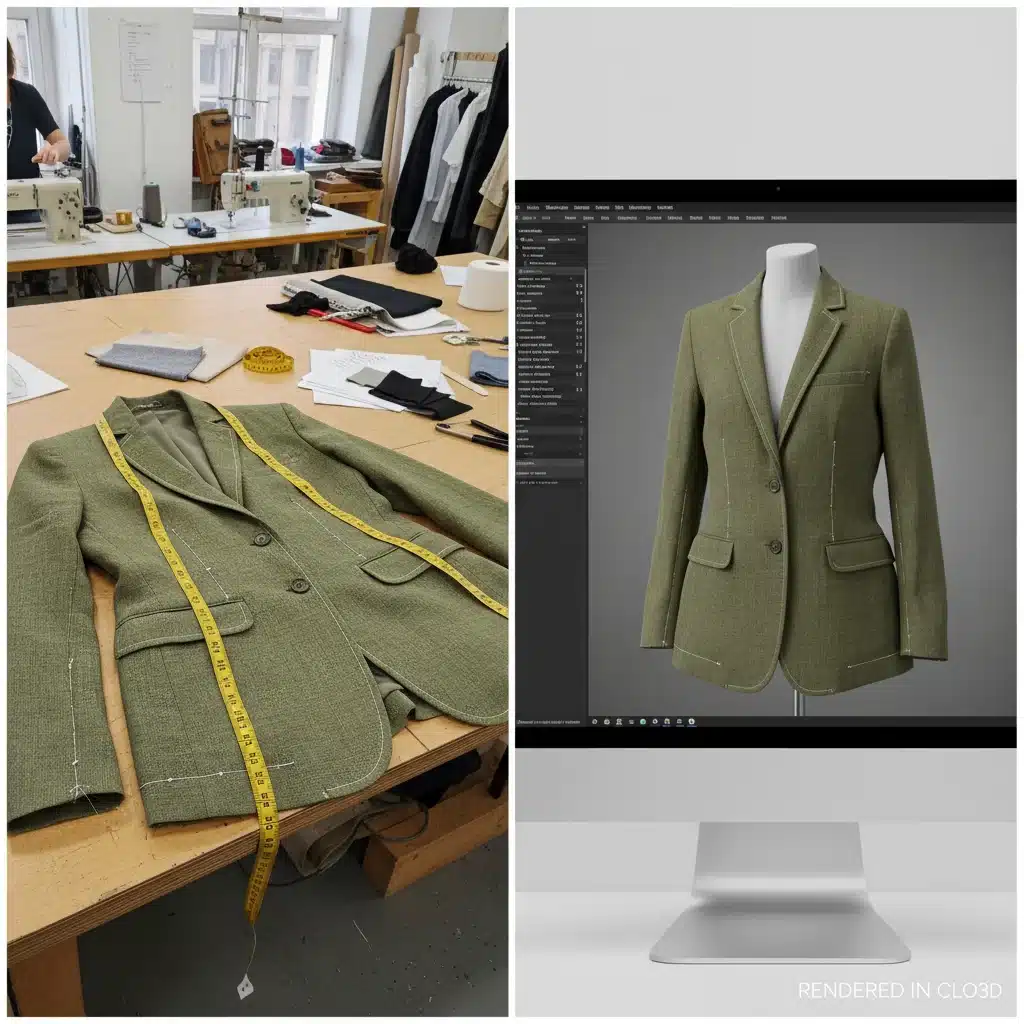
This 30% reduction is not just an arbitrary number; it represents a tangible decrease in waste and resource consumption. For SHEIN, this means fewer fabric offcuts, less water and energy used in manufacturing samples, and a reduction in the carbon emissions associated with shipping prototypes around the globe. This efficiency is particularly impactful in the United States, a key market for SHEIN, where logistical complexities and consumer expectations for speed are high.
The Role of Virtual Fashion Software in Sustainable Fashion
The fashion industry faces increasing scrutiny over its environmental impact. From water consumption and chemical pollution to textile waste and carbon emissions, the challenges are immense. While fast fashion, in particular, has been a target of criticism, technologies like virtual fashion design software offer powerful tools to drive sustainability within this sector.
Minimizing Waste and Resource Consumption
The most direct sustainable benefit of virtual fashion software is the reduction in physical waste. By cutting down on the number of physical samples, companies like SHEIN directly reduce:
- Fabric Waste: Less fabric is cut and discarded during the prototyping phase.
- Water and Energy Consumption: Fewer samples mean less water and energy are used in the dyeing, washing, and manufacturing processes.
- Chemical Use: Reduced processing of physical materials leads to lower chemical usage.
- Transportation Emissions: The need to ship samples between designers, manufacturers, and review teams is significantly diminished, lowering the carbon footprint of logistics.
Furthermore, the precision offered by virtual fashion software can lead to more accurate pattern making and grading, which in turn reduces cutting waste during mass production. By optimizing designs digitally, manufacturers can maximize fabric utilization, further contributing to resource efficiency.
Accelerating Time to Market and Reducing Overproduction Risk
While often overlooked in sustainability discussions, overproduction is a major environmental issue in fashion. Brands often produce large quantities of garments based on sales forecasts, leading to unsold inventory that eventually ends up in landfills. The speed and accuracy afforded by virtual fashion design software can help mitigate this risk.
By accelerating the design and development cycle, companies can wait longer to commit to production volumes, reacting more precisely to real-time market demand. This ‘leaner’ approach to production, where garments are produced closer to actual orders, reduces the likelihood of overstocking and subsequent waste.
For SHEIN, whose model already emphasizes rapid response, virtual fashion software further refines this capability, enabling even more precise production planning and minimizing the environmental burden associated with unsold goods.
Enhancing Transparency and Communication
Effective communication across the supply chain is crucial for both efficiency and sustainability. Virtual fashion design software provides a universal visual language that transcends geographical and linguistic barriers. Digital 3D models serve as clear, unambiguous representations of designs, reducing misinterpretations and errors that can lead to costly rework and additional samples.
This enhanced transparency in the design process benefits all stakeholders, from designers and pattern makers to manufacturers and merchandisers. Everyone can visualize the exact specifications of a garment, ensuring that the final product aligns perfectly with the initial creative vision, further reducing the need for multiple physical prototypes.
Challenges and Future Outlook for Virtual Fashion Software Adoption
Despite the immense benefits, the widespread adoption of virtual fashion design software is not without its challenges. The initial investment in software licenses and hardware can be substantial, and there is a learning curve associated with training design teams to proficiently use these complex tools. Furthermore, achieving true photorealism and accurate fabric simulation requires powerful computing resources and skilled operators.
However, as the technology matures and becomes more accessible, these barriers are diminishing. Cloud-based solutions are reducing upfront costs, and user interfaces are becoming more intuitive. The long-term benefits in terms of cost savings, increased efficiency, and improved sustainability far outweigh the initial hurdles.

The future of virtual fashion software is bright. We can expect to see further advancements in:
- Artificial Intelligence (AI) and Machine Learning (ML): AI could automate repetitive design tasks, assist with trend forecasting, and even generate initial design concepts.
- Augmented Reality (AR) and Virtual Reality (VR): AR/VR technologies will offer even more immersive design experiences, allowing designers and consumers to interact with virtual garments in highly realistic environments. Imagine trying on clothes virtually from the comfort of your home.
- Digital Fabric Libraries: Extensive digital libraries of fabric properties will enable even more accurate simulations and streamline material selection.
- Integration with the Metaverse: As the metaverse evolves, virtual fashion software will be crucial for creating digital apparel for avatars and virtual experiences, opening up entirely new revenue streams for fashion brands.
For companies like SHEIN, continued investment in and optimization of virtual fashion design software will be paramount to maintaining their competitive edge and addressing growing demands for more sustainable practices. The ability to innovate rapidly while simultaneously reducing environmental impact positions them favorably for the future of fashion.
Conclusion: Virtual Fashion Software – A Pillar of Modern Fashion Production
The fashion industry is at a pivotal moment, with technology driving unprecedented change. Virtual fashion design software is no longer a niche tool but a fundamental component of modern apparel production, particularly for agile and high-volume players like SHEIN.
By enabling designers to create, visualize, and iterate on garments entirely in a 3D digital environment, this technology offers a multitude of benefits: it accelerates the creative process, enhances design accuracy, and significantly reduces the reliance on physical samples. This reduction, estimated at 30% or more, translates directly into massive savings in materials, labor, and logistics, contributing substantially to both economic efficiency and environmental sustainability.
For SHEIN, operating in the demanding United States market and beyond, the strategic adoption of virtual fashion software is not just about staying competitive; it’s about redefining the very nature of fast fashion. It demonstrates a pathway to a future where speed and sustainability can coexist, where innovation is fueled by digital prowess, and where the environmental footprint of fashion is progressively reduced. As the technology continues to evolve, its impact will only grow, solidifying its role as an indispensable tool for the fashion industry of tomorrow.