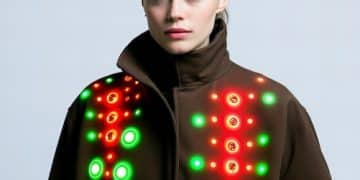
E-Textiles: The Future of Smart Clothing for Health and Comfort
Anúncios
E-textiles, also known as smart fabrics, integrate digital technology into clothing, enabling features like health monitoring and enhanced comfort through sensors, connectivity, and interactive elements.
Anúncios
Imagine clothing that monitors your health, adjusts to your body temperature, and even communicates with your devices. That’s the promise of E-Textiles: Integrating Technology into Clothing for Health Monitoring and Enhanced Comfort, a revolutionary field that’s changing how we interact with what we wear.
What are E-Textiles and Why are They Important?
E-textiles, often referred to as smart textiles or electronic textiles, represent a convergence of traditional fabric materials with electronic components. This integration allows clothing and other textiles to sense, react, and adapt to various stimuli, offering a range of functionalities not possible with conventional fabrics.
Anúncios
The importance of e-textiles lies in their potential to revolutionize numerous industries, from healthcare to sportswear. By embedding sensors and connectivity directly into clothing, these textiles can provide real-time data on physiological parameters, environmental conditions, and even physical activity, opening doors to personalized health monitoring, enhanced athletic performance, and improved safety in hazardous environments.
The Evolution of E-Textiles
The concept of integrating electronics into textiles dates back several decades, with early examples including heated clothing for extreme weather conditions. However, recent advancements in materials science, microelectronics, and wireless communication have significantly accelerated the development and adoption of e-textiles.
Key Components of E-Textiles
E-textiles typically consist of several key components that work together to enable their functionality. These include conductive fibers, sensors, microcontrollers, power sources, and communication modules. The specific components used in an e-textile product depend on the intended application and performance requirements.
- Conductive Fibers: These materials, often made of metal-coated polymers or carbon nanotubes, allow electrical signals to be transmitted through the fabric.
- Sensors: E-textiles incorporate various sensors to detect changes in physiological parameters (e.g., heart rate, body temperature), environmental conditions (e.g., temperature, humidity), or physical activity (e.g., movement, pressure).
- Microcontrollers: These miniature computers process the data collected by sensors and control the operation of other electronic components in the e-textile.
- Power Sources: E-textiles require a power source to operate, which can range from small batteries to energy harvesting devices that convert body heat or movement into electricity.
In conclusion, e-textiles represent a significant advancement in textile technology, offering the potential to transform various industries with their ability to integrate electronic functionality into everyday clothing and fabrics.
Health Monitoring Applications of Smart Clothing
One of the most promising applications of e-textiles lies in continuous and unobtrusive health monitoring. By embedding sensors into clothing, these textiles can collect a wealth of physiological data, enabling early detection of health issues, personalized treatment plans, and improved overall wellness.
From monitoring heart rate and respiratory rate to tracking sleep patterns and stress levels, e-textiles offer a convenient and effective way to keep tabs on your health in real-time.

Specific Health Monitoring Features
E-textiles can be designed to monitor a wide range of vital signs and physiological parameters. Some of the most common health monitoring features include:
- Heart Rate Monitoring: Sensors embedded in the chest area of a shirt or bra can continuously track heart rate, providing valuable data for athletes and individuals with cardiovascular conditions.
- Respiratory Rate Monitoring: E-textiles can measure respiratory rate by detecting changes in chest expansion and contraction during breathing.
- Body Temperature Monitoring: Temperature sensors can be integrated into clothing to monitor body temperature, which is useful for detecting fevers or tracking changes in body temperature during exercise.
- Sleep Monitoring: Smart pajamas or bedding can track sleep patterns, including sleep duration, sleep stages, and sleep quality.
Benefits for Patients and Healthcare Providers
The use of e-textiles for health monitoring offers several benefits for both patients and healthcare providers. For patients, these textiles provide continuous, real-time data on their health, allowing them to take proactive steps to improve their wellness. For healthcare providers, e-textiles can provide valuable insights into a patient’s condition, enabling more informed treatment decisions.
E-textiles offer significant advantages in health monitoring by providing continuous, real-time data, unobtrusive integration into daily life, and the potential for early detection of health issues.
Enhancing Comfort and Performance with Smart Textiles
Beyond health monitoring, E-textiles also offer the potential to enhance comfort and improve performance in various activities, from sports and fitness to everyday wear. By integrating sensors and actuators into clothing, these textiles can respond to changes in the environment or the wearer’s body, creating a more comfortable and functional experience.
Imagine a shirt that wicks away sweat to keep you cool during intense workouts or pants that adjust to your body temperature to keep you warm on chilly days.
Adaptive Clothing for Optimal Comfort
One of the key benefits of e-textiles is their ability to adapt to changing conditions. For example, smart clothing can automatically adjust its insulation level based on the wearer’s body temperature or the ambient temperature, providing optimal comfort in a variety of environments.
Performance Enhancement in Sports
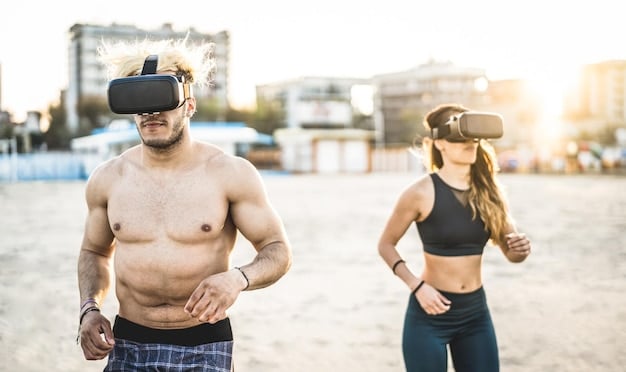
E-textiles can also be used to enhance athletic performance. By monitoring muscle activity, heart rate, and other physiological parameters, these textiles can provide valuable feedback to athletes, helping them optimize their training and improve their performance.
Examples of Comfort and Performance Features
- Moisture-Wicking Fabrics: E-textiles can incorporate moisture-wicking fabrics that draw sweat away from the skin, keeping the wearer cool and dry.
- Temperature Regulation: Smart clothing can adjust its insulation level based on the wearer’s body temperature or the ambient temperature.
- Muscle Stimulation: E-textiles can deliver electrical impulses to stimulate muscles, improving strength and endurance.
- Posture Correction: Smart clothing can provide feedback to the wearer to improve their posture, reducing the risk of back pain and other musculoskeletal problems.
In conclusion, e-textiles offer a wide range of solutions for enhancing comfort and improving performance in various activities by adapting to changing conditions.
Challenges and Opportunities in E-Textile Development
Despite the immense potential of e-textiles, several challenges remain in their development and commercialization. These challenges range from technical hurdles to concerns about cost and durability.
However, overcoming these challenges will unlock a new wave of possibilities of e-textiles.
Technical Challenges
One of the main technical challenges in e-textile development is creating electronic components that are durable, flexible, and washable. Traditional electronic components are often rigid and fragile, making them unsuitable for integration into clothing.
Cost and Scalability
The cost of e-textile components and manufacturing processes can also be a barrier to widespread adoption. E-textiles often require specialized materials and manufacturing techniques, which can drive up costs.
Opportunities for Innovation
Despite these challenges, the e-textile industry presents numerous opportunities for innovation. New materials, manufacturing processes, and applications are constantly emerging, creating exciting possibilities for entrepreneurs and researchers.
- Development of Flexible and Stretchable Electronics: Innovations in flexible and stretchable electronics for seamless integration into clothing.
- Creation of Energy Harvesting Technologies: Development of energy harvesting technologies to power e-textiles.
- Exploration of New Applications: Development of new applications for e-textiles in industries such as healthcare, sports, and fashion.
Addressing the challenges in e-textile development while seizing the opportunities for innovation offers to drive the future growth and impact of this transformative technology.
The Future of E-Textiles: Trends and Predictions
The future of e-textiles is bright, with numerous trends and predictions pointing towards significant growth and innovation in the years to come. As technology advances and consumer awareness increases, e-textiles are poised to become an integral part of our daily lives.
From more sophisticated health monitoring applications to seamless integration with virtual and augmented reality technologies, the possibilities for e-textiles are endless.
Key Trends Shaping the E-Textile Industry
Several key trends are shaping the e-textile industry, including the increasing demand for personalized health monitoring, the growing popularity of wearable technology, and the convergence of fashion and technology.
Predictions for the Next Decade
Over the next decade, we can expect to see e-textiles become more affordable, durable, and integrated into everyday clothing. We may also see the emergence of new applications for e-textiles in areas such as virtual reality, gaming, and industrial safety.
Impact on Various Industries
E-textiles are poised to disrupt various industries, including healthcare, sports, fashion, and manufacturing. In healthcare, e-textiles can improve patient outcomes by enabling remote monitoring and personalized treatment. In sports, e-textiles can enhance athletic performance by providing real-time feedback and injury prevention. In fashion, e-textiles can create interactive and personalized clothing experiences.
In summary, e-textiles are poised to become an integral part of our daily lives with trends such as personalization, wearable technologies, and converging industries.
Ethical and Privacy Considerations with Smart Fabrics
As E-textiles become more prevalent, it’s essential to address the ethical and privacy considerations associated with these technologies. These considerations revolve around data security, user consent, and the potential for misuse of personal information.
Careful deliberation and implementation of robust safeguards around ethical and privacy are crucial to foster public confidence and ensure responsible development of e-textiles.
Data Privacy and Security
One of the primary concerns with e-textiles is the potential for collecting and storing sensitive personal data. This data could include health information, location data, and even biometric information.
User Consent and Transparency
It’s essential that users are fully informed about the types of data that e-textiles collect, how that data is used, and with whom it is shared. Users should also have the ability to control their data and opt out of data collection if they choose.
Preventing Misuse and Discrimination
There is also a risk that e-textile data could be misused to discriminate against certain groups of people. For example, employers could use e-textile data to track employee productivity or health status, which could lead to discriminatory hiring or firing practices.
Considering ethical and privacy considerations is absolutely crucial as e-textiles advance, protecting personal data, requiring user consent, and preventing misuse.
| Key Point | Brief Description |
|---|---|
| 💡 Definition | E-textiles integrate electronics into clothing. |
| ❤️ Health Monitoring | Tracks vital signs for proactive health management. |
| 💪 Performance Enhancement | Improves comfort and athletic performance. |
| 🔒 Privacy | Requires strong data protection and transparency. |
FAQ About E-Textiles
E-textiles, or electronic textiles, are fabrics with integrated digital components like sensors and microcontrollers. They combine traditional textiles with technology to create “smart” clothing.
Sensors woven into e-textiles can track vital signs such as heart rate, body temperature, and respiratory rate. This data can be transmitted to a smartphone or other device for real-time monitoring.
Key challenges include creating durable, washable electronic components, reducing costs, and ensuring data privacy and security. Flexibility of both the fabric and electronics are also key.
E-textiles can improve athletic performance by monitoring muscle activity, providing feedback on posture and form, and regulating body temperature to optimize comfort and efficiency.
Important ethical considerations include data privacy and security, user consent, and prevention of misuse or discrimination based on collected data. Transparency is also very important.
Conclusion
As we look to the future, E-Textiles: Integrating Technology into Clothing for Health Monitoring and Enhanced Comfort presents exciting opportunities and complexities. By addressing the ethical considerations around user consent to protect data, ensuring safety and promoting sustainability, e-textiles will unlock even greater potential. As innovations continue, smart clothing is poised to revolutionize well-being, performance, and our relationship with fashion.