SHEIN Sizing Secrets 2026: Master Your Fit for Perfect Hauls (Insider Tips)
Anúncios
SHEIN Sizing Secrets 2026: How to Get a Perfect Fit 95% of the Time (INSIDER KNOWLEDGE)
Anúncios
Welcome to the ultimate guide for conquering SHEIN sizing in 2026! If you’ve ever felt the thrill of a SHEIN haul quickly turn into the dread of ill-fitting clothes, you’re not alone. SHEIN, a global fast-fashion giant, offers an astounding array of trendy, affordable clothing, but its diverse sizing can be a notorious puzzle. The good news? With the right knowledge and a strategic approach, you can achieve a perfect fit 95% of the time. Yes, 95%! This isn’t just about reading a size chart; it’s about understanding the nuances, leveraging insider tips, and becoming a true SHEIN sizing detective. Prepare to transform your online shopping experience, minimize returns, and build a wardrobe full of pieces that fit you like a dream.
The landscape of online fashion, particularly with platforms like SHEIN, is constantly evolving. What worked last year might not be the most efficient strategy this year. That’s why this 2026 updated guide incorporates the latest insights, common pitfalls, and advanced techniques to ensure your SHEIN purchases are consistently successful. We’ll delve deep into the art of accurate measurement, the science of fabric analysis, the wisdom hidden in customer reviews, and the strategic use of SHEIN’s own tools. By the end of this article, you’ll be equipped with the confidence and knowledge to navigate SHEIN’s vast catalog like a seasoned pro, making every haul a triumph of style and fit. Let’s unlock those SHEIN sizing secrets together!
Understanding the SHEIN Sizing Conundrum: Why It’s Tricky
Before we dive into solutions, it’s crucial to understand why SHEIN sizing can be so challenging. Unlike traditional retailers that often adhere to a single, consistent sizing standard, SHEIN operates on a different model. The platform sources clothing from thousands of different manufacturers and suppliers globally. Each supplier might have its own interpretation of what constitutes a ‘small,’ ‘medium,’ or ‘large,’ leading to significant variations even within the same product category on SHEIN’s website. This lack of a universal standard is the primary reason why a size M dress from one brand on SHEIN might fit perfectly, while another size M top from a different supplier could be either too tight or too loose.
Anúncios
Furthermore, fast fashion’s rapid production cycles mean that new items are added daily, and older ones are frequently updated or replaced. This constant flux makes it difficult to rely solely on past experiences with specific items or brands on the platform. The materials used can also vary widely, from stretchy knits to rigid wovens, which inherently affect how a garment drapes and fits. A cotton blend top might have more give than a polyester one, even if both are labeled the same size. Understanding these underlying complexities is the first step towards developing an effective strategy for mastering SHEIN sizing. It’s not about SHEIN being ‘bad’ at sizing; it’s about understanding their operational model and adapting your shopping approach accordingly.
The Myth of Universal Sizing and SHEIN’s Reality
Many shoppers mistakenly believe that a size ‘Small’ is universally consistent across all brands and retailers. This is a pervasive myth, and it’s particularly misleading when it comes to global marketplaces like SHEIN. The truth is, sizing standards vary wildly by country, region, and even by individual brand. A US size 6 is not the same as a UK size 6, nor an EU size 36, and even within the US, a size 6 at one store might fit differently than a size 6 at another. SHEIN, being a global platform, reflects this international diversity. Their clothing often comes with tags indicating various international sizes (e.g., S, M, L alongside 36, 38, 40), which can add to the confusion if you’re not accustomed to these discrepancies.
The key takeaway here is to abandon the idea of a ‘fixed’ size. Instead, embrace the concept of ‘item-specific sizing.’ Every single item on SHEIN should be treated as if it has its own unique size chart, because, in essence, it does. This mindset shift is fundamental to successful SHEIN shopping and will guide all the strategies we discuss next. When you approach each product with the expectation that its fit might differ from the last, you’re already halfway to making smarter purchasing decisions. Never assume your usual size will fit; always verify.
Your Personal Sizing Toolkit: Measurements are Gold
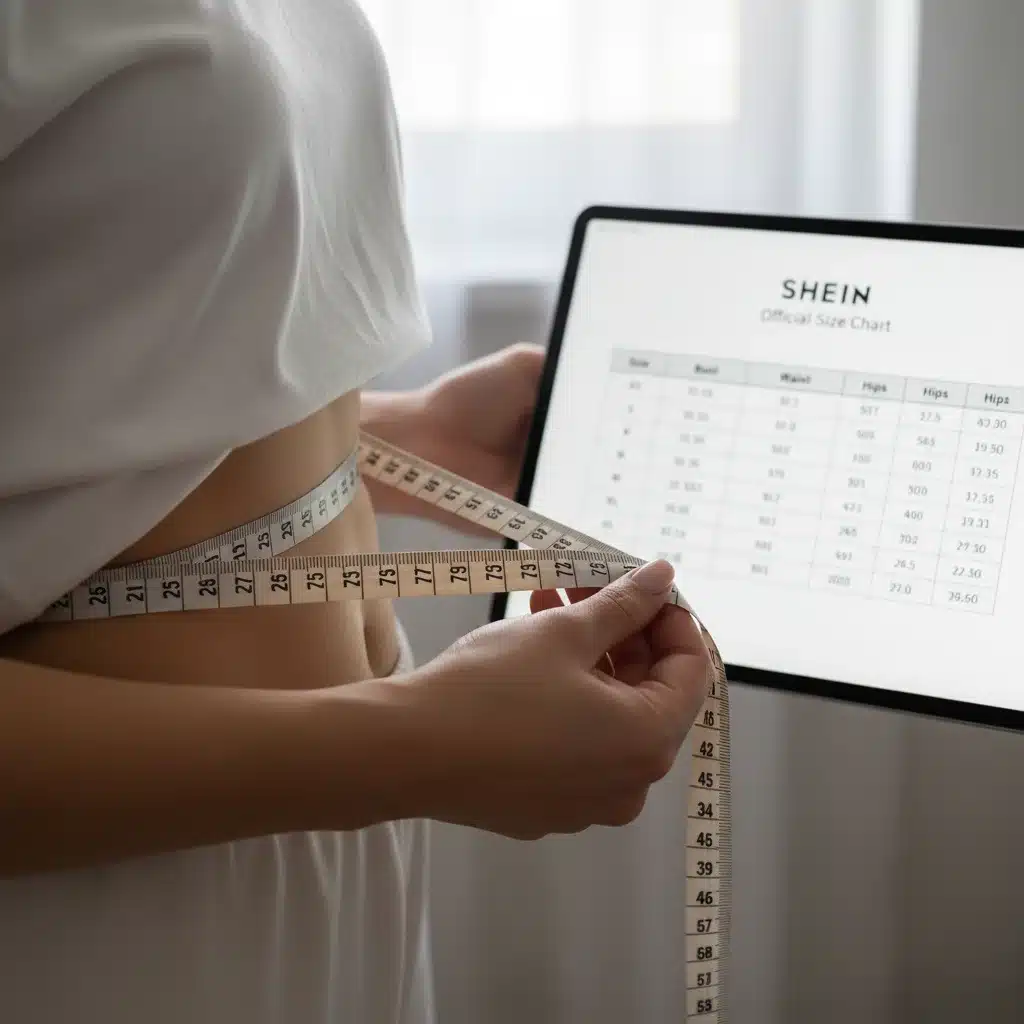
The single most important tool in your SHEIN sizing arsenal is a fabric tape measure, and your most valuable data points are your accurate body measurements. This cannot be stressed enough. Relying on your ‘usual size’ is the quickest way to disappointment. SHEIN provides detailed measurements for almost every item, and these are your true north.
Step-by-Step: How to Take Accurate Body Measurements for SHEIN
To get a perfect fit, you need to know your own body measurements precisely. Here’s how to do it correctly:
- Bust: Measure around the fullest part of your bust, keeping the tape measure snug but not tight. Ensure the tape is parallel to the floor.
- Waist: Find your natural waistline, which is usually the narrowest part of your torso, just above your belly button. Measure around this area.
- Hips: Stand with your feet together and measure around the fullest part of your hips and bottom.
- Shoulder Width: Measure straight across your back from the edge of one shoulder to the other.
- Sleeve Length: With your arm slightly bent, measure from the top of your shoulder down to your wrist.
- Inseam: Measure from your crotch down to your ankle bone on the inside of your leg. This is crucial for pants and jeans.
- Torso Length (for bodysuits/jumpsuits): This is a less common but vital measurement for one-piece items. Measure from the top of your shoulder, over your bust, down through your crotch, and up to your back shoulder. Alternatively, measure from the highest point of your shoulder down to your crotch.
Pro Tip: Take these measurements while wearing minimal clothing or undergarments. Update them regularly, especially if your weight or body shape changes. Keep a dedicated note on your phone or a physical card with these measurements for quick reference while shopping.
Decoding SHEIN’s Item-Specific Size Charts
Every product page on SHEIN has a ‘Size Guide’ button. Click it! This is where the magic happens. Inside, you’ll find a chart that provides specific measurements for that particular garment, usually in centimeters and inches. These measurements often include bust, waist, hip, length, shoulder, and sleeve length, depending on the item.
Crucial Insight: These are usually the measurements of the garment itself, not your body. You need to compare your body measurements to the garment measurements. For example, if your bust is 36 inches, and a top’s size M bust measurement is 38 inches, that M might be a good fit, allowing for a couple of inches of ease. If the garment’s bust is 34 inches, it will likely be too small.
Ease Allowance: Remember to factor in ‘ease.’ This is the extra room in a garment beyond your body measurements to allow for movement and comfort. A fitted item might only have 1-2 inches of ease, while a loose-fitting or oversized item will have significantly more. If the garment’s measurements are almost identical to your body measurements, it will be skin-tight.
The Power of Customer Reviews and Photos
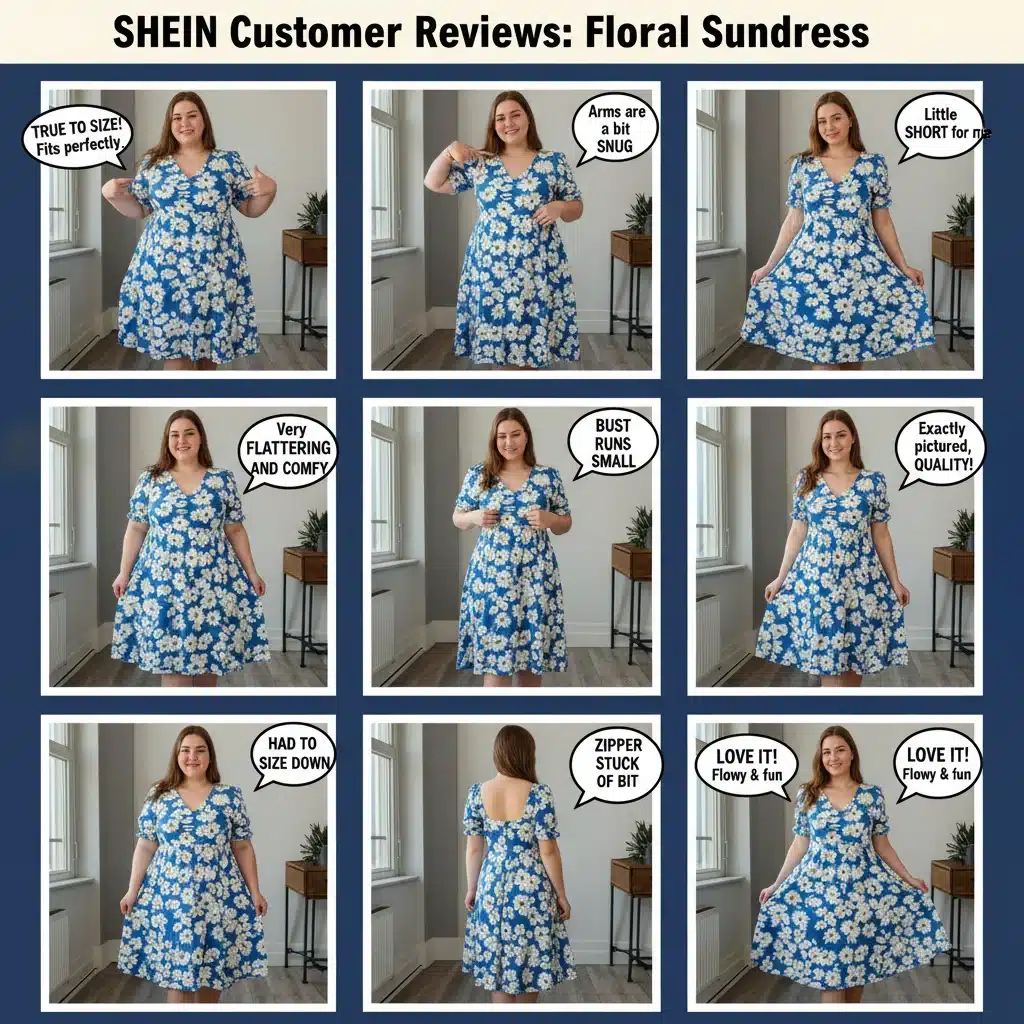
Beyond the official size charts, SHEIN’s vibrant community of reviewers offers an unparalleled wealth of sizing insights. Ignoring this section is like leaving money on the table. Customer reviews, especially those with photos, are your secret weapon for understanding how an item truly fits on real bodies.
What to Look For in Reviews
- Body Measurements of Reviewers: Many helpful reviewers include their own bust, waist, hip, height, and weight measurements. Compare their measurements to yours. If someone with similar dimensions to you says a size M fit perfectly, chances are it will fit you too.
- Photos: Visuals are invaluable. Look at how the item drapes on different body types. Does it look true to the model’s photo? Does it appear tighter or looser on reviewers? Pay attention to how the fabric falls and where seams lie.
- Specific Fit Comments: Search for keywords like ‘true to size,’ ‘runs small,’ ‘runs large,’ ‘stretchy,’ ‘no stretch,’ ‘short torso,’ ‘long torso,’ ‘petite-friendly,’ or ‘tall-friendly.’ These comments provide direct feedback on the garment’s fit characteristics.
- Fabric Description Feedback: Reviewers often comment on the fabric quality and feel, which can indirectly inform sizing. A fabric described as ‘stiff’ might mean less give, requiring you to size up, while ‘very stretchy’ might allow you to size down.
Filtering Reviews: SHEIN often allows you to filter reviews by size, height, or even body type. Use these filters to narrow down reviews from people most similar to you. This can save you a tremendous amount of time and provide highly relevant feedback.
Fabric Matters: Understanding Material Composition
The fabric composition is a critical, yet often overlooked, factor in SHEIN sizing. Different materials behave differently, affecting stretch, drape, and overall fit. Always check the ‘Composition’ or ‘Material’ section on the product page.
Common Fabrics and Their Sizing Implications:
- Cotton/Linen: Generally has little to no stretch. If an item is 100% cotton or linen, assume it will be true to its measurements with minimal give. You might need more ease.
- Polyester: Varies greatly. Some polyesters are soft and flowy, others can be stiff. Look for blends. 100% polyester often has minimal stretch unless it’s a knit.
- Spandex/Elastane/Lycra: Any percentage of these materials indicates stretch. The higher the percentage, the more stretch. Items with 5%+ spandex will typically be more forgiving in sizing, allowing for a snugger fit or giving you flexibility if you’re between sizes.
- Rayon/Viscose: Known for its drape and softness. Can sometimes shrink slightly after washing, so factor that in. Generally has a good flow.
- Knit Fabrics (e.g., Rib-knit, Sweater Knit): These inherently have more stretch and give than woven fabrics, even without high spandex content. They tend to be more forgiving.
- Denim: Can be rigid or stretchy. Always check the composition for spandex. Rigid denim will require precise measurements, while stretchy denim allows for more flexibility.
Actionable Tip: If an item is made of a non-stretch fabric (e.g., 100% cotton woven, rigid denim), and your measurements are borderline between two sizes, it’s generally safer to size up. For very stretchy items, you might be able to size down for a more fitted look, or stick to your size for comfort.
Advanced SHEIN Sizing Strategies for 2026
Now that we’ve covered the fundamentals, let’s explore some advanced techniques to refine your SHEIN sizing precision even further.
1. The ‘Compare Similar Items’ Hack
SHEIN’s search function is powerful. If you find an item you love but are unsure about the fit, try searching for ‘similar items’ or using descriptive keywords (e.g., ‘rib-knit crop top,’ ‘floral maxi dress’). Often, you’ll find very similar garments from different suppliers. Compare their size charts and reviews. Sometimes, one listing might have more detailed measurements or a more robust review section, giving you better insight into the general fit of that style.
2. The ‘Shop by Model Size’ Feature (If Available)
SHEIN sometimes provides the model’s measurements and the size they are wearing. While models are often styled to make clothes look perfect, this can be a reference point. If you know the model’s bust, waist, and hip measurements, and she’s wearing a Small that looks oversized, it gives you an idea of the garment’s generous cut. Use this in conjunction with customer reviews, not as a standalone guide.
3. Understanding the ‘Fit’ Description (Oversized, Slim Fit, Regular)
Pay attention to the general ‘fit’ description if provided on the product page. ‘Oversized’ means it’s designed to be loose, so don’t size up expecting it to be even more oversized unless that’s your specific aesthetic. ‘Slim fit’ or ‘bodycon’ means it’s designed to hug your curves, so ensure your measurements align perfectly, or even consider sizing up if you prefer less cling. ‘Regular fit’ implies a standard, comfortable fit.
4. The Importance of Length Measurements
For dresses, skirts, and tops, the ‘length’ measurement is crucial, especially if you are particularly tall or petite. A dress might fit perfectly in the bust and waist but be too short or too long for your preference. Always check the garment length against your own height and desired hemline. For bottoms, the inseam is paramount. Don’t forget to check rise (distance from crotch to waistband) for pants and skirts, as this affects where the garment sits on your waist/hips.
5. The ‘Small Order’ Test Strategy
If you’re new to SHEIN or trying a new category (e.g., swimwear, outerwear), consider making a smaller, test order first. Choose 2-3 items in different styles or from different ‘brands’ (suppliers) that you’re interested in. Pay close attention to how they fit when they arrive. This allows you to learn about the general sizing tendencies for your body type on SHEIN without committing to a massive haul that might lead to many returns.
Troubleshooting Common SHEIN Sizing Issues
Even with the best strategies, sometimes things don’t fit perfectly. Here’s how to troubleshoot common issues:
Too Big?
- Why it happened: You might have overestimated your size, or the item was genuinely oversized.
- Solution: Can it be altered? A simple hem or taking in a side seam can be inexpensive. Can you style it differently (e.g., belt a dress, tuck in a top)? If not, SHEIN’s return process is generally straightforward.
Too Small?
- Why it happened: Underestimated your size, or the item runs very small.
- Solution: If it’s only slightly snug and made of a stretchy material, sometimes gentle stretching or wearing it in can help. If it’s genuinely too small and uncomfortable, it’s best to return it. Consider if you missed key review comments about it running small.
Length Issues?
- Why it happened: Didn’t check the length measurement against your height, or assumed it would be proportional.
- Solution: For too long, consider hemming. For too short, can it be worn with leggings, bike shorts, or as a tunic? If not, a return might be necessary.
Sleeve Issues?
- Why it happened: Shoulder width or arm length wasn’t accounted for.
- Solution: Too long sleeves can be cuffed or altered. Too short sleeves are harder to fix but might be acceptable for a 3/4 sleeve look.
Maximizing Your SHEIN Returns (When Necessary)
Despite all your best efforts using these SHEIN sizing secrets, a small percentage of items might still not fit. This is an inherent part of online shopping. Knowing SHEIN’s return policy and process is crucial for a stress-free experience.
Key Aspects of SHEIN Returns:
- Return Window: Typically 30-45 days from the purchase date, but always check the specific policy on their website as it can vary by region.
- First Return Free: SHEIN usually offers one free return label per order. Subsequent returns from the same order might incur a small shipping fee.
- Conditions: Items must be unworn, unwashed, with all original tags attached, and in their original packaging. Certain items (e.g., swimwear with hygiene liner removed, bodysuits, lingerie, jewelry, beauty products) are often non-returnable for hygiene reasons. Always check the product page.
- Process: Initiate returns through your SHEIN account. You’ll usually print a return label and drop off the package at a designated carrier. Refunds are processed once the warehouse receives and inspects the items.
Insider Tip: If you’re unsure about an item and think you might return it, try it on immediately upon arrival. Don’t remove tags until you’re certain you’ll keep it. Keep all original packaging until you’ve made your decision.
The Future of SHEIN Sizing: What to Expect in 2026 and Beyond
As SHEIN continues to grow and innovate, we can anticipate further advancements in their sizing tools and features. In 2026, and looking ahead, expect to see:
- Enhanced AI-Powered Recommendations: More sophisticated algorithms that learn from your past purchases and returns, offering increasingly personalized size suggestions.
- Virtual Try-On Technologies: While still in early stages for many retailers, virtual try-on features that use augmented reality to show how clothes might look on your body shape could become more prevalent.
- Standardization Efforts: Although difficult for a marketplace model, SHEIN might introduce more internal brand categories with more consistent sizing.
- Improved Review Features: Potentially more structured review forms that prompt users for specific fit feedback (e.g., ‘Was the bust true to size?’, ‘How was the sleeve length?’).
Staying informed about these developments will further empower you to make even better SHEIN sizing decisions in the years to come. The goal remains the same: a perfect fit, every time.
Conclusion: Master Your SHEIN Hauls with Confidence
Navigating SHEIN sizing doesn’t have to be a gamble. By adopting a strategic, informed approach, you can dramatically improve your success rate and ensure that your SHEIN hauls are filled with perfectly fitting, stylish pieces. Remember the core principles:
- Know Your Measurements: This is non-negotiable. Update them regularly.
- Consult Every Size Chart: Treat each item’s size chart as unique and compare it directly to your body measurements.
- Leverage Customer Reviews: Read comments, look at photos, and filter for similar body types.
- Understand Fabric Composition: Factor in stretch and drape when making your decision.
- Utilize Advanced Strategies: Compare similar items, understand fit descriptions, and consider test orders.
With these SHEIN sizing secrets in your arsenal for 2026, you’re not just buying clothes; you’re investing in a smarter, more satisfying online shopping experience. Say goodbye to sizing woes and hello to a wardrobe that perfectly reflects your style and fits you flawlessly. Happy shopping!